Weddings and Neurodiversity: How To Make Wedding Easier for Neurodivergent Attendees?
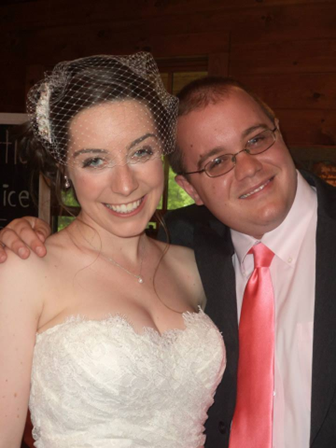
It’s May of 2013, a cold and raw day in an abandoned Girl Scout camp in New Hampshire. Quite an unusual place to have a wedding, isn’t it? But, that’s the way that my sister, Dr. Hilary Snyder Neves, and her husband, Shawn, wanted to have for their big day. When most people think of weddings, they imagine them in a location where the mood is set to romance, such as a country club, someone’s backyard, and most importantly, a church, synagogue, or a house of worship. But, it was in their nature to have their wedding in the woods overlooking the New Hampshire landscape.
But what was in it for me? The neurodivergent member of the wedding party?
Well, for one thing, in addition to being a groomsman, I also co-officiated the wedding ceremony with the wedding planner’s mother. Being a natural public speaker, it seemed that it was appropriate that I was a co-officiant. However, while the day itself wasn’t entirely perfect, it consisted of dreary weather and three mosquito bites on my left hand, the anticipation of it was very challenging leading up to the ceremony on May 25th, 2013.
I bring up anticipation as a major plot point because a lot of neurodivergent individuals struggle with anticipating something, even if it’s something exciting and joyful as a wedding. Sure, there was a lot of drama (which is to be expected given especially on the bride’s side), but my key approach was to not say anything at all and just stay in my lane.
Eventually, we survived the wedding day, and now my sister and her husband are happily married with three beautiful daughters on a farm in Southwest Virginia.
…
For this article, I wanted to offer some tips and tricks as a neurodivergent who had attended weddings since I was 13 years old, when I was also a groomsman for my kindergarten teacher’s wedding. Some neurodivergent individuals can handle loud noises and crowds, but some cannot, and couples should not hesitate to try to make the day accommodating for everyone attending their big day.
Let’s take a look at some of the basic challenges that neurodivergent individuals face on wedding days and how to make them more sensory-friendly.
The first big challenge affecting neurodivergent individuals is, of course, the wedding attire. It’s no secret that wedding attire is downright uncomfortable and very sensory-provoking. However, you also don’t want to attend a wedding looking like Adam Sandler at this year’s Academy Awards or Rex Harrison not dressed for the Ascot Gavotte in “My Fair Lady” (1964).
To many families, what to wear to the wedding is as big as the wedding day itself. There is the constant torture of having to be dragged to a department store to try on specific clothes and being forced to model awkwardly in front of parents, grandparents, and siblings. For me, it was no exception as I am not a fan of being dragged to department stores and being fitted for wedding attire. Many male individuals will usually wear a tie to the wedding ceremony, an example whether it’s a bow tie or a traditional necktie. Wearing a tie can give the individual the choking feeling how ladies did when they wore corsets back in the day.
Speaking of women, their biggest challenge is wearing high-heeled shoes to go with whatever dress or pantsuit they plan to wear. Some (depending on the season in which the wedding is taking place) will also opt to wear nylon stockings or pantyhose that can make the individual perspire and feel tight in their legs when they walk around. And if you think that it’s hard for men to go try wedding clothes on, for women it’s not just the dress, pantsuit or high heels, there is also the hair appointments, getting their makeup put on to make them feel like a sack of potatoes being pushed around from one place to another.
…
This brings us to the first solution, in which wedding clothes are nothing more than clothes. What do I typically do at weddings? I wear a necktie for the ceremony and then open up the shirt for the reception. For women they can wear high heels for the ceremony and then switch to flats for the reception.
However, if there is one thing that I don’t recommend, and for that matter, I personally can’t stand, is seeing people wearing sneakers to a wedding ceremony. I have seen plenty of photos during special occasions where people wear sneakers in photos. Weddings are not the place for anyone to wear sneakers, so it helps if there are shoes that are sensory-friendly and comfortable, yet appropriate for a wedding ceremony.
The second problem that neurodivergents come across is forced social contact with people that they would otherwise not want to talk to. I mean, yes weddings are family affairs, but an individual who doesn’t want to be social doesn’t have to be social. As a matter of fact, families who are trying to climb the social ladder will often force neurodivergent children and adults to socialize to maintain their social standing.
At the end of the day, you have to ask yourself one of two questions: Question A: Should I just focus on my social status, or Question B: Should I sacrifice my loved one’s mental health for the sake of talking to people? And it’s not just talking to people at the weddings, but also being forced into photography, talking with family members who are curious to know what’s in your life, and especially those who would much rather not care to respect the boundaries of the individual. Yes, I get that we all want to capture the moment of the big day, but the mental health of a neurodivergent is far more important than a photograph.
The solutions for combating forced contact include allowing the individual to wear headphones, which may seem rude to some, but it also gives the individual a sense of social security and drowns out any loud noises, allowing them to cope with the environment around them. Then, there is also the sunflower lanyard that is often promoted to signal to others that someone has a hidden difference or condition. For those of you who don’t know what the sunflower lanyard is, it is a green lanyard with yellow sunflowers on it that most neurodivergent people wear in airports, but also can be worn at any time and any place. Finally, it’s always a good idea for the individual to have the option to only focus on the people he or she is close with. Yes, I get that some family and friends would like to talk to someone that they don’t know otherwise, but if the individual has very little contact with that someone, they don’t need to have the option to talk to them.
The third problem most neurodivergent individuals at weddings come across may seem like a surprise to many wedding participants, and that is the lighting, mostly at the reception, which involves disco music and loud rock music. However, there is also the matter of the ceremony itself, as some venues will have fluorescent lighting that can be bothersome to individuals with the sounds they make or the sensory challenges that come with it. The individual might have an unwanted increase in sensory overload because they have a hard time processing the lighting, and there are even some who are epileptic, and the flashing lights on the dance floor, for example, could cause the individual to have a seizure.
To this end, it would have to be essential for the couple to have the lights lowered throughout the ceremony. I also get that some wedding parties will go against the idea of a low-lighting ceremony, but low lighting can reduce the chances of overstimulation, especially during the actual ceremony itself. A good example of this is demonstrated in the film version of “Fiddler on the Roof” (1971) where the wedding of the characters Motel and Tzeitel is done entirely in candlelight.
The fourth problem is something that cannot be avoided when it comes to large-scale weddings, and that is noise. I get it, we all have ended up in that one situation where it’s nothing but noise, noise, and more noise. There is excitement for the married couple, excitement for what the future holds for them, guests complementing each other’s wedding attire, etc. However, weddings also have bars containing alcohol that some guests will frequently visit, and the frequent consumption could make them even louder because of their drunken nature than the next guest.
However, neurodivergent individuals do not need to be in a situation that they don’t want to be in, especially if there are going to be people who drink and are going to be loud. Before the wedding, the bride and groom can select a designated quiet area for the individuals to go to if they are overstimulated or overwhelmed. Some of the areas can range from a private room to right outside the venue. Trust me, being a neurodivergent, I also have sensory processing disorder, and having something like a quiet space during a wedding or large-scale event is critical to me. But there are going to be those attendees who don’t care about a person’s space and may get agitated because of a lack of understanding.
Finally, the fifth problem is that weddings can be a disruption in the individual’s daily routine. Neurodivergent individuals thrive on routine and can get very upset if that routine is disrupted. As I’ve gotten older, I’ve gotten to be more (mostly) flexible with sudden changes in my routine. These can range from taking an early morning trip by air, land, or sea, which requires getting up early in the morning and being forced to stay up late at night during the reception. Some families will often jump the gun and accuse the individual of ruining the entire wedding ceremony just because of their routine being disrupted.
Now, attending weddings can be planned just as much as the wedding day itself. We all want to be there for the couple, but it’s always a good idea to have a plan in place, particularly around the wedding reception. I’ve been to several weddings where I’ve often stayed until past midnight on a few occasions. Some people like staying for the whole reception, others do not. Staying for a wedding reception is not mandatory, as there may even be some people who share the same idea as the individual. For one thing, you could have the individual stay for the first half of the reception, then, depending on whether they are enjoying the reception, they can have the option to leave because they celebrated the best way they know how.
There is also the option of maybe having the individual bring a plus one or date along to the wedding, especially if they are close to someone. That isn’t to say that it is like the date is going to be a security blanket, but they either like weddings or have the same mindset as the individual in terms of leaving at a specific time. Who knows? Maybe the individual has a girlfriend or boyfriend who will one day end up marrying and envisioning their own wedding day.
…
In conclusion, weddings are like any other celebration, but it’s always a good idea to consider the fact that there can be accommodations made to make the day enjoyable and tolerable. Much like planning the wedding day itself, planning the wedding to accommodate a sensory-friendly individual is just as important.
…
To learn more about “Going the Distance” and the services I offer, reach out to me at: godistance3562@gmail.com
Or check out my website, which includes a training about neurodiversity and weddings that I can present to your organization or next event:
Find more inspiration & resources on our Pinterest.
Shop our Amazon storefront for our most used finds.